Limo tint is usually 5% VLT, which means it allows only 5% of visible light to pass through the glass. In simple terms, it blocks about 95% of visible light, making it one of the darkest window tint options available.
This is why limo tint is often associated with privacy, luxury vehicles, executive transportation, and blacked-out rear windows. It gives a vehicle a sleek, private look, but it also comes with important safety and legal considerations.
Before choosing limo tint for your car, SUV, limousine, or private transportation vehicle, it is important to understand what the percentage means, how dark it really is, and where it may or may not be legal.
What Does Limo Tint Mean?
The term “limo tint” is commonly used to describe extremely dark window tint. In most cases, it refers to 5% window tint, which is darker than standard car tint options like 20%, 35%, or 50%.
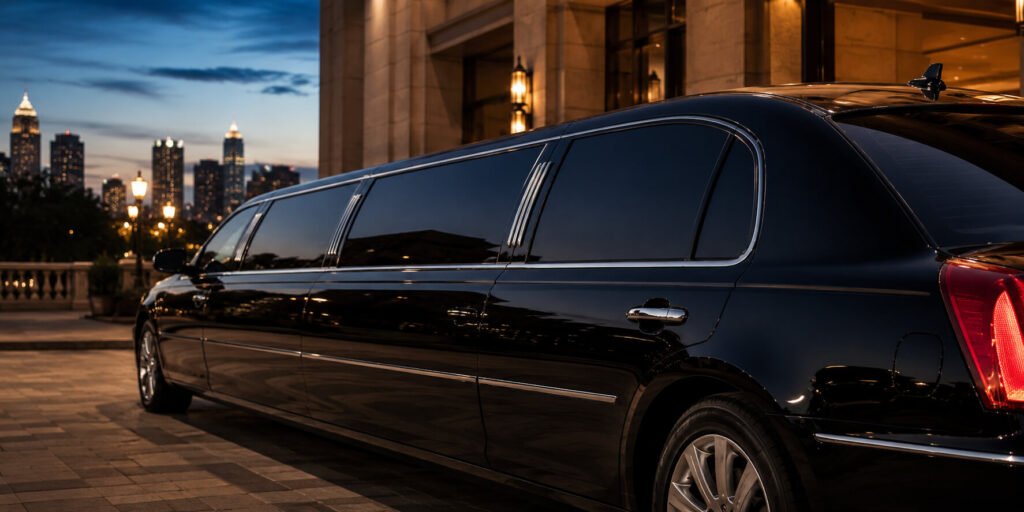
It gets the name “limo tint” because limousines are often designed with dark rear windows for passenger privacy. People inside can enjoy a more private, comfortable ride, while people outside have a very limited view into the vehicle.
That same luxury look is now popular on many sedans, SUVs, trucks, vans, and black car vehicles. Many people choose it for style, privacy, glare reduction, and a more premium appearance.
For a professional transportation company, dark rear tint also creates a more comfortable passenger experience. Guests often expect privacy when booking a premium ride, especially for airport transfers, weddings, corporate travel, proms, and nights out.
What Is VLT In Window Tint?
VLT stands for Visible Light Transmission. It is the percentage of visible light that can pass through the window after tint is applied.
The lower the VLT number, the darker the tint. The higher the VLT number, the lighter the tint.
For example, 5% tint is much darker than 35% tint because it allows far less light through the glass. A 70% tint, on the other hand, looks almost clear compared with limo tint.
Here is a simple way to understand tint percentages:
- 5% tint allows 5% of visible light through
- 20% tint allows 20% of visible light through
- 35% tint allows 35% of visible light through
- 50% tint allows 50% of visible light through
- 70% tint allows 70% of visible light through
When people ask, “What percent is limo tint?” they are really asking how much light passes through it. The answer is usually 5%, which is why limo tint looks nearly black from the outside.
Is Limo Tint Always 5%?
Most of the time, yes. True limo tint is considered 5% VLT.
However, some people use the phrase loosely. A person may call 10%, 15%, or even 20% tint “limo dark” simply because it looks darker than average. But in the tinting industry, when someone says limo tint, they usually mean 5%.
This matters because there is a big difference between 5% and 20%. Both can look dark, but 5% gives far more privacy and far less visibility. If you ask an installer for limo tint, make sure you confirm the exact VLT percentage before installation.
A good installer should explain how the film will look in real life, how it will perform at night, and whether it meets local tint laws for each window on your vehicle.
How Dark Is 5% Limo Tint?
5% limo tint is extremely dark. From the outside, it can be very difficult to see inside the vehicle, especially during the day. This is one reason it is popular for rear passenger windows, luxury transportation vehicles, and vehicles carrying guests who value privacy.
From inside the vehicle, the experience is different. During bright daylight, many people can still see out through 5% tint, although the view is darker. At night, visibility becomes much more challenging.
This can be especially noticeable when reversing, turning into a dark driveway, checking mirrors, driving in rain, or navigating poorly lit streets. For this reason, 5% tint is not always the best option for daily drivers, especially on front side windows.
Limo tint looks stylish, but it is not only a cosmetic choice. It affects visibility, safety, and legal compliance.
Limo Tint Vs 20% Vs 35% Tint
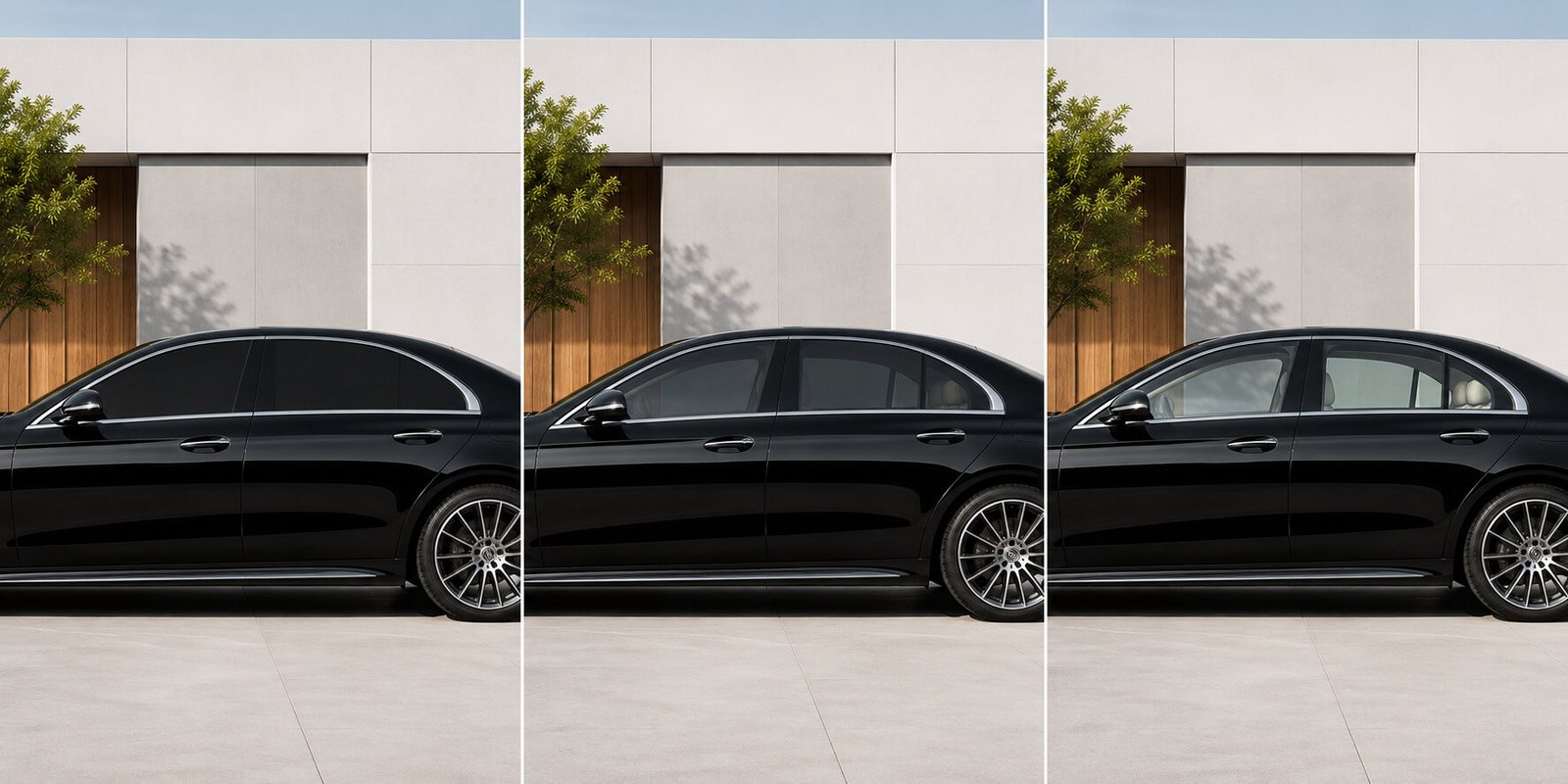
Many people compare limo tint with 20% and 35% because these are common choices for personal vehicles. Each option has a different balance of privacy, appearance, visibility, and legality.
A 5% tint gives the darkest look and the highest privacy. It is the closest option to the classic limousine appearance. However, it also creates the most visibility challenges, especially at night.
A 20% tint is still dark, but it is more practical than 5%. It gives a private appearance while allowing more light into the vehicle. Many drivers choose 20% when they want a bold look without going as dark as limo tint.
A 35% tint is a more balanced choice. It adds style and glare reduction while keeping visibility much easier. It is also more likely to be acceptable in areas where front-window tint laws are stricter, although local laws always need to be checked.
If you are asking whether 20% or 35% tint is darker, the answer is simple: 20% tint is darker than 35% tint because it allows less light to pass through.
Is 5% Limo Tint Legal?
The legality of limo tint depends on your state, your vehicle type, and which windows are tinted. Tint laws are usually based on VLT percentage, and front windows often have stricter rules than rear windows.
In many areas, 5% tint is not legal on the front driver and passenger windows. Some places allow darker tint on rear side windows and back windows, especially on SUVs, vans, and limousines.
This is why a vehicle can have dark rear windows while still needing lighter front windows. The law often treats the windshield, front side windows, rear side windows, and back glass differently.
Before installing limo tint, you should check the current tint laws in your state. You should also ask your installer if the final tint percentage will remain legal after the film is applied over factory glass.
Does Factory Glass Affect Tint Percentage?
Yes, factory glass can affect the final tint percentage.
Many vehicles already have slightly tinted glass from the manufacturer. When you add window film over that glass, the final VLT may be darker than the film percentage alone.
For example, adding 20% film over glass that is already tinted can create a final result that is lower than 20%. This is why two vehicles with the same film can look different after installation.
This is also why professional measurement matters. A tint meter can measure the final VLT after film and glass are combined. If you are trying to stay legal, you should not only think about the tint film percentage. You should think about the final percentage on the actual window.
Can You See Through Limo Tint At Night?
You can see through 5% tint at night, but visibility is very limited compared with lighter tint options. This is one of the biggest drawbacks of limo tint.
At night, your eyes already have less light to work with. When only 5% of visible light passes through the window, it becomes harder to see objects, pedestrians, curbs, cyclists, and other vehicles in low-light conditions.
This can make simple driving tasks more difficult. Parking, reversing, changing lanes, and turning onto darker streets may require extra caution.
For rear passenger privacy, limo tint can make sense where allowed. For front windows, it can create real safety concerns. Drivers who travel often at night may be happier with 20%, 35%, or a lighter ceramic film that provides comfort without making visibility too dark.
Does Limo Tint Block More Heat?
Many people assume darker tint always blocks more heat, but that is not always true. Tint darkness and heat rejection are not the same thing.
VLT measures visible light. Heat rejection depends on the quality and technology of the film. A cheap 5% dyed film may look very dark, but it may not block heat as well as a high-quality ceramic film with a lighter shade.
Ceramic tint is often a better choice for people who want heat rejection, UV protection, and comfort without making the windows extremely dark. A 35% or 50% ceramic tint can sometimes perform better than a darker low-quality film.
This is important because many drivers choose limo tint thinking it is the only way to keep a vehicle cooler. In reality, the film type matters as much as the percentage.
If comfort is your main goal, ask about heat rejection, infrared rejection, UV protection, and film quality—not just darkness.
Why Do Limousines Use Dark Tint?
Limousines use dark tint mainly for passenger privacy and comfort. When people book luxury transportation, they often expect a quiet, private environment where they can relax, talk, celebrate, or prepare for an event without feeling exposed.
Dark rear windows also help create the classic limousine look. The blacked-out style feels elegant, polished, and premium.
For events like weddings, proms, corporate meetings, airport pickups, and VIP transportation, privacy can be part of the overall experience. This is one reason professionally chauffeured vehicles often have a more private feel than ordinary rideshare vehicles.
At Nashville Limousine Services, the focus is always on comfort, professionalism, and a smooth travel experience. Whether guests book a limousine, SUV, sedan, or Sprinter from our luxury fleet, the goal is to provide a ride that feels private, clean, reliable, and suited to the occasion.
Who Should Choose Limo Tint?
Limo tint may be a good choice for people who want maximum privacy on rear windows. It is commonly preferred for passengers, cargo areas, luxury transportation vehicles, and special-event vehicles where privacy matters.
It may also appeal to drivers who want a bold, blacked-out look. The appearance is sleek and dramatic, especially on luxury cars, SUVs, and limousines.
However, limo tint is not ideal for everyone. If you drive at night often, live in an area with strict tint enforcement, or want excellent visibility through every window, 5% tint may feel too dark.
It is also not usually a smart choice for front side windows unless your local laws allow it and you fully understand the visibility tradeoff.
A balanced approach is often better. Many vehicles use darker rear tint for privacy and lighter front tint for safety and legal compliance.
Best Alternatives To Limo Tint
If 5% tint feels too dark or may not be legal in your area, there are several alternatives that still look stylish and provide comfort.
A 20% tint is a popular choice for people who want a dark appearance without going as extreme as limo tint. It gives strong privacy while allowing more visibility than 5%.
A 35% tint is better for daily driving. It still gives the vehicle a clean, tinted look but is easier to see through at night and in poor weather.
A 50% or 70% ceramic tint is a great option for people who care more about heat reduction and UV protection than a dark appearance. These lighter ceramic films can help improve comfort without making the windows look blacked out.
Choosing the right tint depends on your priorities. Privacy, legal compliance, appearance, heat rejection, and night visibility all matter.
Do Cops Care About 5% Tint?
Police enforcement depends on the state, city, vehicle type, and situation. Some drivers may go years without being stopped for dark rear-window tint. Others may get pulled over quickly if the front windows are very dark.
5% tint on front windows is much more likely to attract attention because it can prevent officers from seeing inside the vehicle during a traffic stop. It can also raise safety concerns if the driver’s visibility appears limited.
In many areas, officers can use a tint meter to measure the actual VLT. If the tint is darker than allowed, the driver may receive a warning, ticket, inspection issue, or removal requirement.
Even if enforcement is not strict in your area, the bigger question is whether the tint is safe and practical for how you drive.
Is Limo Tint Good For Luxury Transportation?
Limo tint can be a good fit for luxury transportation when used properly, especially on rear passenger windows where privacy is expected and allowed.
For passengers, dark tint can make the ride feel more exclusive. It creates a quieter, more private atmosphere for conversations, celebrations, business calls, or simply relaxing during the trip.
This is one reason people booking black car service in Nashville often value vehicles that feel polished and private. The transportation experience is not only about getting from one place to another. It is also about comfort, presentation, timing, and peace of mind.
For professional service, tint should always support the passenger experience without compromising driver safety or legal requirements.
Limo Tint And Event Transportation
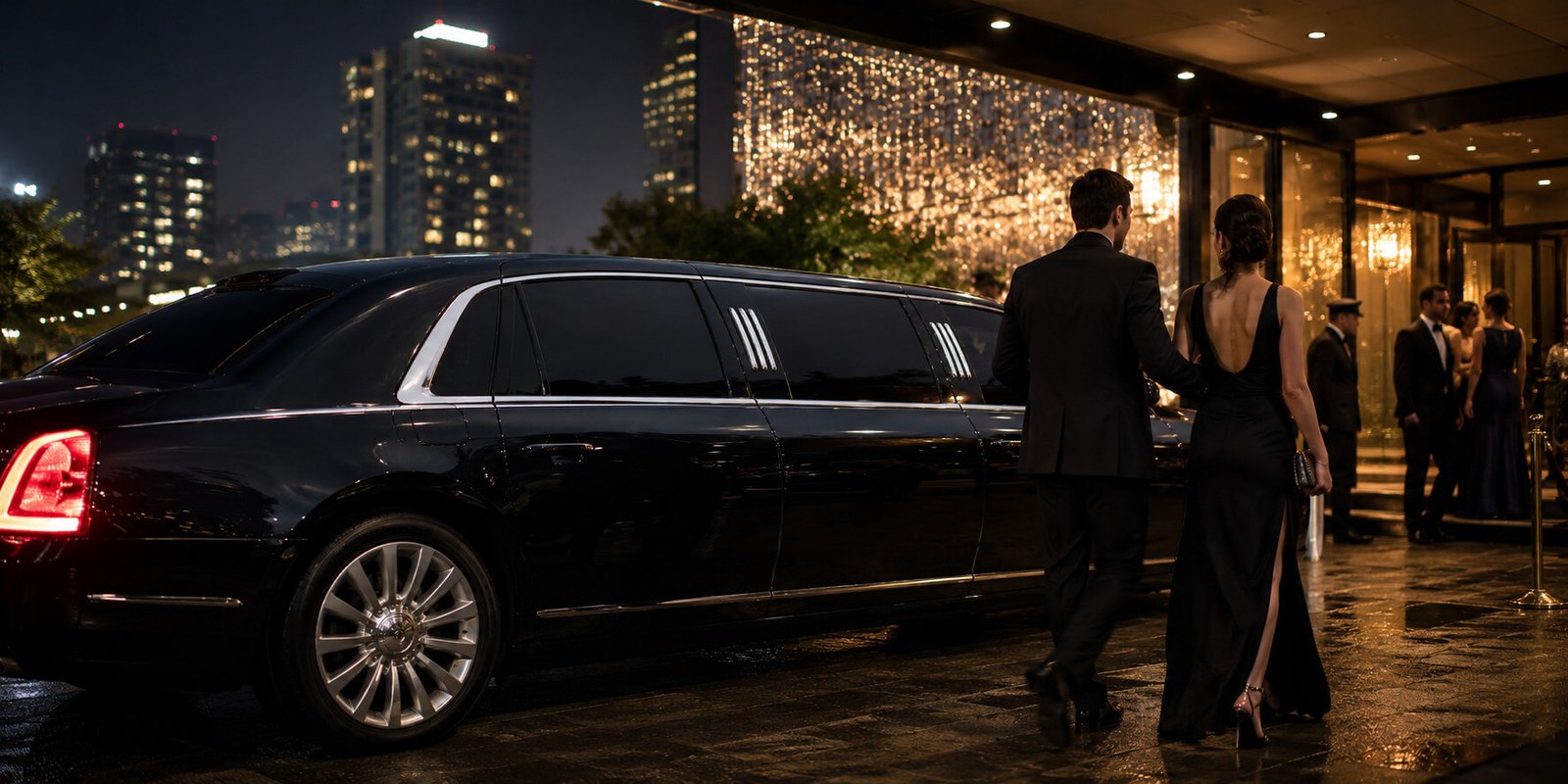
Dark tint is especially popular for special occasions because it adds to the sense of arrival. Whether it is a wedding, prom, corporate event, birthday, concert, or night out in Nashville, a private ride can make the day feel more organized and memorable.
For groups, privacy also matters because passengers may be dressed formally, carrying bags, celebrating, or traveling between multiple stops. A properly selected vehicle helps the whole experience feel smoother.
When guests reserve transportation for an event, they are usually looking for more than a vehicle. They want reliable pickup, professional service, clean interiors, comfortable seating, and a ride that fits the occasion.
That is why many people choose chauffeured transportation instead of driving themselves. For simple direct travel between two locations, point-to-point transportation can provide the same private, polished experience without the stress of parking, traffic, or coordinating multiple cars.
How To Choose The Right Tint Percentage
The best tint percentage depends on how you use the vehicle. A show vehicle, limousine, daily commuter, family SUV, and corporate car may all need different tint choices.
If privacy is your top priority, 5% tint gives the darkest look. If you want strong privacy but better visibility, 20% may be a smarter choice. If you want a balanced daily-driver option, 35% is often easier to live with.
If heat rejection is the main concern, focus less on darkness and more on film quality. Ceramic tint can offer excellent comfort while keeping the glass lighter and safer for visibility.
Before choosing a tint percentage, consider:
- Your state’s legal tint limits
- Whether the tint is for front or rear windows
- How often you drive at night
- Whether your vehicle already has factory tint
- Whether privacy or heat rejection matters more
- Whether you prefer a luxury look or a legal-friendly finish
A professional installer can help you compare options and avoid choosing a tint that looks good during the day but feels difficult at night.
Final Answer: What Percent Is Limo Tint?
Limo tint is usually 5% VLT. That means only 5% of visible light passes through the window, while about 95% is blocked. It is one of the darkest tint percentages available and is commonly used for privacy, luxury styling, and rear passenger comfort.
However, limo tint is not the best choice for every window or every driver. It can reduce visibility at night, may not be legal on front windows, and can create safety concerns in low-light conditions.
For maximum privacy, 5% tint is the classic limo-style option. For a better balance of privacy, visibility, and daily usability, 20% or 35% tint may be more practical. For heat rejection without going extremely dark, a high-quality ceramic tint may be the better solution.
If you are choosing tint for a luxury vehicle, limousine, SUV, or private transportation experience, the right percentage should match the purpose of the vehicle, the comfort of the passengers, and the safety of the driver.
FAQs About Limo Tint Percentage
What percent tint do limos use?
Most limos use or are associated with 5% VLT tint. This is why 5% tint is commonly called limo tint. It allows only a small amount of visible light through the window and creates a very private appearance.
Is limo tint 5%?
Yes, true limo tint is generally considered 5% tint. Some people may casually use the term for other dark shades, but the standard meaning is 5% VLT.
Is 20% or 35% tint darker?
20% tint is darker than 35% tint. A 20% tint allows less light through the glass, while 35% allows more light through and appears lighter.
Can you see through 5% tint at night?
You can see through it, but visibility is limited. 5% tint can make it harder to see clearly at night, especially in rain, parking lots, rural roads, and poorly lit areas.
Is 5% tint legal?
It depends on your state and the window position. In many places, 5% tint is not legal on front driver and passenger windows, but rear-window rules may be different.
Do cops care about 5% tint?
Enforcement varies by location, but 5% tint on front windows is more likely to attract attention. Police may use a tint meter to check whether the window meets legal VLT limits.
Is 20% tint legal in Texas?
Tint laws depend on the window and vehicle type, so it is important to check current Texas requirements before installation. Front windows usually have stricter limits than rear windows.
What is the best tint percentage for privacy?
5% tint provides the most privacy, but it can be difficult to see through at night. Many drivers choose 20% as a more practical privacy option.
Does darker tint block more heat?
Not always. Heat rejection depends on film quality and technology. A lighter ceramic tint can sometimes block more heat than a darker low-quality dyed tint.
Is limo tint good for daily driving?
Limo tint can be too dark for many daily drivers, especially at night. For regular driving, 20%, 35%, or ceramic tint may offer a better balance of comfort, privacy, and visibility.